
Short answer
Large, long or unusually shaped products can be difficult to package safely. Using the nearest standard box often leaves too much empty space, requires excessive void fill and can increase the risk of damage. A made-to-measure solution is normally more secure and easier to handle. Here are the main points to consider.
Start with accurate measurements
Measure the product's maximum length, width and height, including any handles, fittings or protruding parts.
Also provide its weight and identify areas that could be easily damaged. Photographs can be particularly useful when the product has an unusual shape. Remember that the box needs enough space for protective packaging, not just the product itself. The brief, sample and supply route on our bespoke packaging page starts from exactly this information.
Choose the correct board grade
Large boxes need sufficient strength to cope with the product's weight, stacking conditions and delivery journey.
Double-wall or heavy-duty corrugated board may be needed for heavier products, but the strongest material is not automatically the best choice. The grade should be selected around the complete application: our guide to choosing the correct corrugated board grade explains how flute, liners and weight interact, and box compression strength covers how stacking loads are calculated.
Stop the product from moving
Movement inside the box is a common cause of damage.
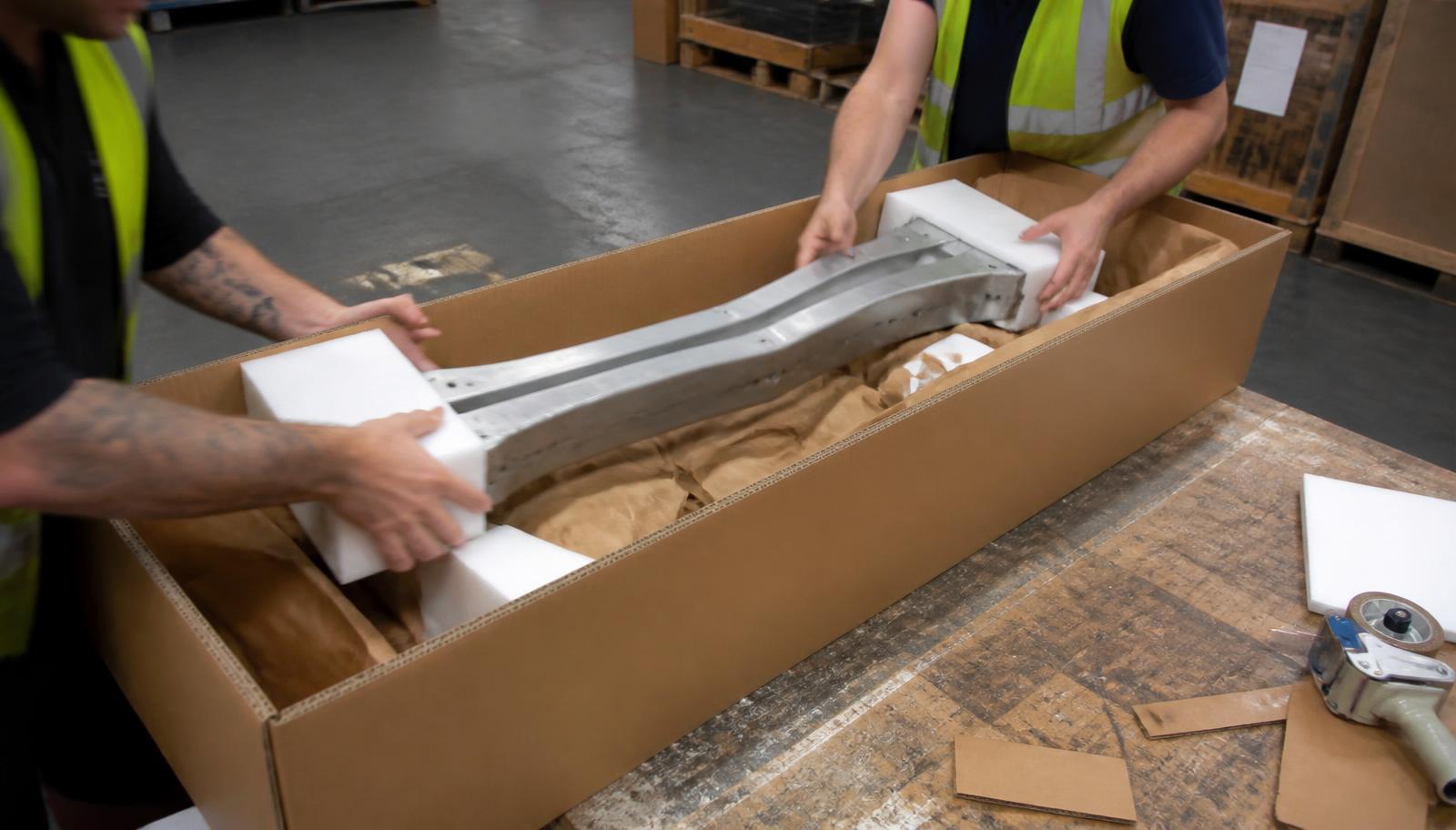
Foam inserts, corrugated fittings, corner protection and paper void fill can hold the product securely. Vulnerable corners, edges and finished surfaces may require additional protection. The protective packaging guide sets out which materials suit which risks. Flat but fragile items follow the same principle: see picture frame boxes for glazed frames and mirrors.
The aim is to immobilise the product without filling an oversized box with unnecessary material.
Consider a different box design
A conventional box is not always the easiest solution.
Long products may suit a telescopic box, while very large items can be packed using multi-part designs, sleeves or separate caps and bases. These formats can be easier to assemble around the product than lowering it into one large container. For oversized and long-format cases specifically, see heavy-duty cardboard boxes.
Think about handling and transport
Consider how the finished pack will be lifted, stored and transported.
Heavy or bulky packs may need to sit on a pallet. The box should fit the pallet correctly without overhanging, and the load must remain stable when wrapped or strapped.
Packaging should also be tested before a full production run, particularly when the product is valuable or easily damaged.
- Measurements: maximum length, width and height including protrusions, plus weight.
- Board grade: matched to weight, stacking and journey rather than always the strongest.
- Internal fittings: immobilise the product and protect corners, edges and finished surfaces.
- Design: telescopic, multi-part, sleeve or cap and base where a single box is impractical.
- Handling: pallet footprint, no overhang, stable when wrapped or strapped.
Made-to-measure packaging from Barton Jones
Barton Jones Packaging designs and manufactures corrugated packaging for large, heavy and awkward products.
Our new box-making equipment gives us greater flexibility to produce low-to-medium runs, oversized boxes and different designs without traditional tooling requirements.
Send us the product dimensions, weight, photographs and expected quantity and our team can recommend a suitable design and board grade. If you would like the current pack assessed first, book a free packaging review or speak to our team.
Frequently asked questions
- What is the largest cardboard box you can make?
- Our box-making equipment produces oversized and long-format corrugated cases in-house, including lengths up to around 2.8m. Larger or more complex items can be packed using multi-part designs, sleeves or separate caps and bases.
- What information do you need to quote packaging for a large product?
- Maximum length, width and height including any handles or protruding parts, the product weight, expected quantity and photographs. Tell us how the pack will be transported and stacked as well, because that affects the board grade.
- Is double-wall board always best for heavy items?
- No. Double-wall or heavy-duty board suits many heavy products, but the correct grade depends on weight, internal fittings, stacking height and the delivery journey. The strongest board is not automatically the most suitable or the most cost effective.
- How do you stop a large product moving inside the box?
- With internal fittings sized around the product: corrugated pads and formers, foam inserts, corner protection and paper void fill. The aim is to immobilise the item rather than fill spare space in an oversized box.
Packaging a large or awkward product?
Send us the dimensions, weight, photographs and quantity and we will recommend a design and board grade made to measure.
Request a Bespoke Packaging QuoteBook a Free Packaging ReviewRelated pages
Subscribe to our blog
One email a month with our latest packaging guides, compliance updates and sector notes. No sales pitches, and you can unsubscribe any time.